



Home/Christmas Light Installation
November – January · Quincy
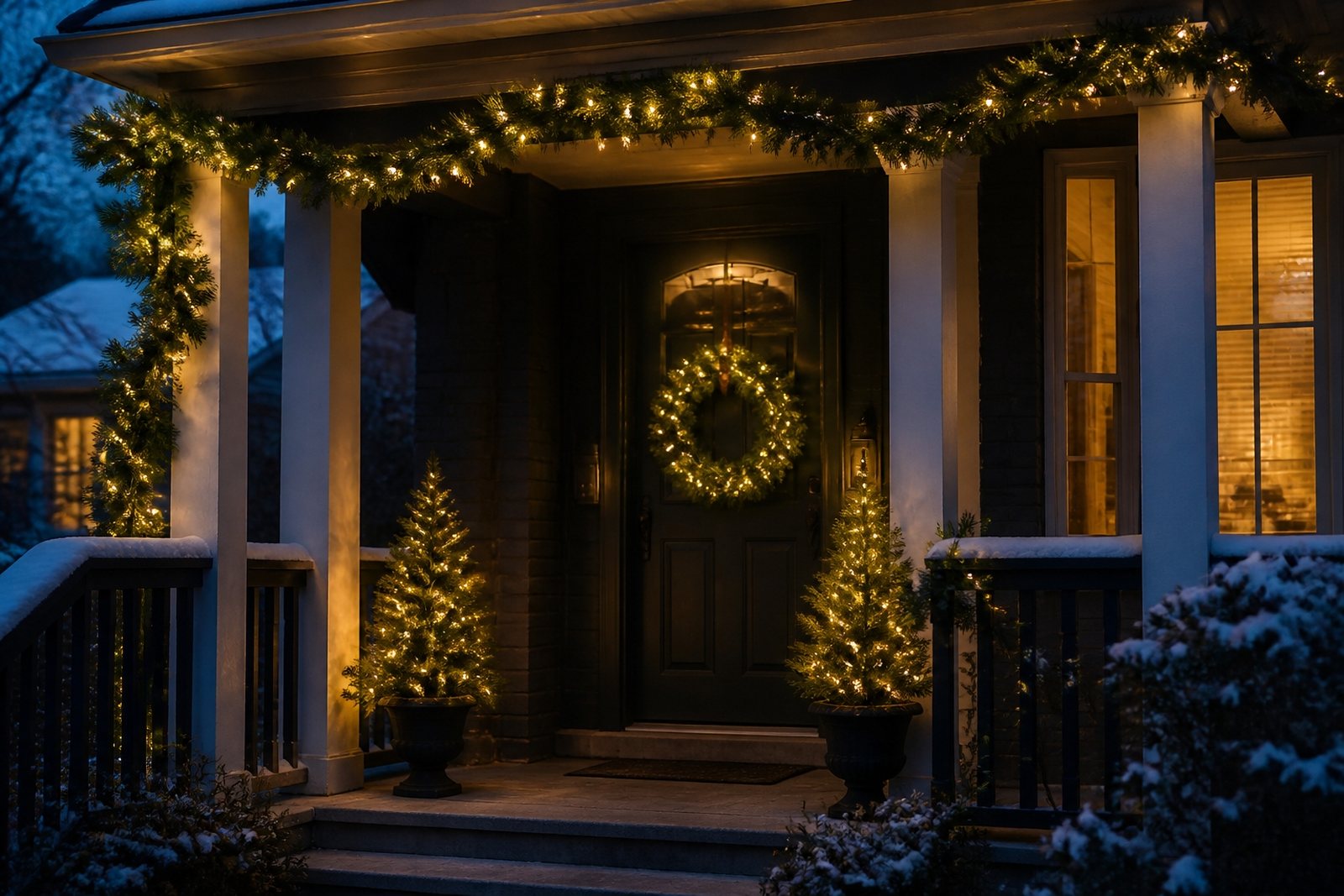
Christmas light installation for Quincy houses
We design the layout, hang the lights, come back when a strand fails, take everything down in January and store it until next year. You never open the ladder.


Local guide · Christmas installs
Holiday Decoration Rules and Fire Code in Quincy
Private house displays are different from decorations in public-facing assembly, retail, restaurant, condominium common-area, or mixed-use spaces. The Massachusetts fire code information is especially relevant when a display sits near an exit route, lobby, stair, shared hall, or occupied commercial area.
| DISPLAY TYPE | SAFETY REQUIREMENT |
|---|---|
| Private exterior roofline | Keep wiring, clips, and décor away from ignition sources and exits. |
| Candles or open flame | Use battery-operated alternatives outdoors and around combustible décor. |
| Shared building entry | Maintain a clear, usable exit path at all times. |
| Commercial or assembly display | Use flame-resistant decorations where required and protect exits. |
- Exit access: Wreaths, garland, inflatable anchors, and extension cords should never narrow a doorway, stair, porch landing, or egress route.
- Open flames: Candles in window displays, dry greenery, and enclosed vestibules create avoidable risk.
- Dense properties: North Quincy, Wollaston, and Quincy Center properties often have close setbacks and shared approaches, so installation plans should keep neighboring access clear.
- Coastal exposure: In Hough's Neck, Squantum, and Marina Bay, secure decorations for wind and remove loose pieces promptly after storms.
Temporary Wiring, Cords and GFCI Requirements for Holiday Displays in Quincy
Outdoor holiday lighting should use listed equipment, weather-suitable cords and fixtures, and exterior receptacles protected for ground-fault conditions under the Massachusetts electrical code requirements. Decorative lighting is temporary; a display that remains in place or becomes part of the building calls for a different electrical approach.
- Use outdoor-rated products: Indoor extension leads, power strips, and light strings do not belong on a wet porch, roof edge, or lawn.
- Avoid cord chains: Daisy-chained extension cords can overload connections and create failure points that are difficult to inspect after snow or rain.
- Keep connections elevated: Place plug connections off snow, mulch, standing water, and low spots where meltwater collects.
- Protect walking paths: Do not run cords across a driveway, porch step, sidewalk, or shared entrance where they can be damaged or become a trip hazard.
- Plan power first: A crew should identify available exterior power and load paths before mounting lights along long gables, dormers, hedges, or detached garages.
Falls From Ladders and Roofs: What the Data Says
Holiday decorating injuries regularly include falls, and the Consumer Product Safety Commission holiday-decoration safety guidance specifically emphasizes ladder and electrical hazards. Roofline work becomes less forgiving when frost, wet leaves, ice, or uneven ground affect footing.
- Set the ladder deliberately: Stable ground, a correct working angle, level feet, and a secured top matter more than reaching one additional clip from the ladder.
- Respect roof conditions: Do not walk a slick asphalt roof, climb onto a snow-covered low-slope surface, or lean a ladder against a fragile gutter.
- Match access to the house: Compact lots and dense street grids in North Quincy and Wollaston can limit ladder placement, while waterfront wind can complicate upper-story work.
- Choose accountable installation: Property owners should confirm that an installer is properly insured before authorizing elevated work on the home.
Displays Over Sidewalks and in Public Spaces: What Needs a Permit in Quincy
A residential display becomes a public-space issue when cords, signs, barriers, freestanding décor, or overhead elements leave the lot line or affect pedestrian travel. Review the ADA accessibility standards for pedestrian routes and coordinate any right-of-way question with the Quincy Department of Public Works before installation.
| INSTALLATION LOCATION | PLANNING DECISION |
|---|---|
| Inside private yard | Keep all anchors, cords, and décor on the property. |
| Across a sidewalk | Do not create an overhead or ground-level obstruction. |
| Near a curb or street tree | Confirm permission before attaching or placing any display item. |
| Shared condominium approach | Obtain property-management approval and preserve accessible passage. |
- Clear passage matters: A planter, stake, extension cord, inflatable tie-down, or display base can become a barrier when it narrows the walking route.
- Do not use public fixtures: Poles, trees, signs, and other public assets are not attachment points for private holiday decorations without authorization.
- Account for snow clearing: Keep displays outside areas likely to receive plowed snow, shoveled accumulation, or meltwater runoff.
Neighborhoods we serve in Quincy
Holiday-lighting plans vary across Quincy because the city combines close-set residential streets, waterfront homes, condominium clusters, and a growing mixed-use downtown.
- North Quincy: Dense street patterns, multifamily homes, and nearby commercial activity make compact ladder staging and cord routing important.
- Wollaston: Roofline displays often need careful access planning around close lots, sidewalks, and mature residential streets.
- Marina Bay: Condominium and waterfront properties benefit from wind-conscious attachment methods and management-approved common-area plans.
- Squantum: Coastal exposure and homes with varied rooflines call for secure clips, restrained layouts, and weather-aware service timing.
- Hough's Neck: Densely developed streets and shoreline conditions make clear access, stable ladder placement, and secure décor especially important.
- Quincy Center: Mixed-use buildings, storefronts, and residential entries require displays that preserve pedestrian access and building exits.
- Germantown: Small apartment buildings, housing complexes, and single-family homes often require coordination with owners or property managers before installation.
Book a walkthrough
Send a photo of the front of the house.
That is usually enough to give you a real number and hold an install window. No obligation, no pressure to book on the call.